Come and see us.
No booking system, no forms. Call, WhatsApp or email and we'll find a time that works for your family.
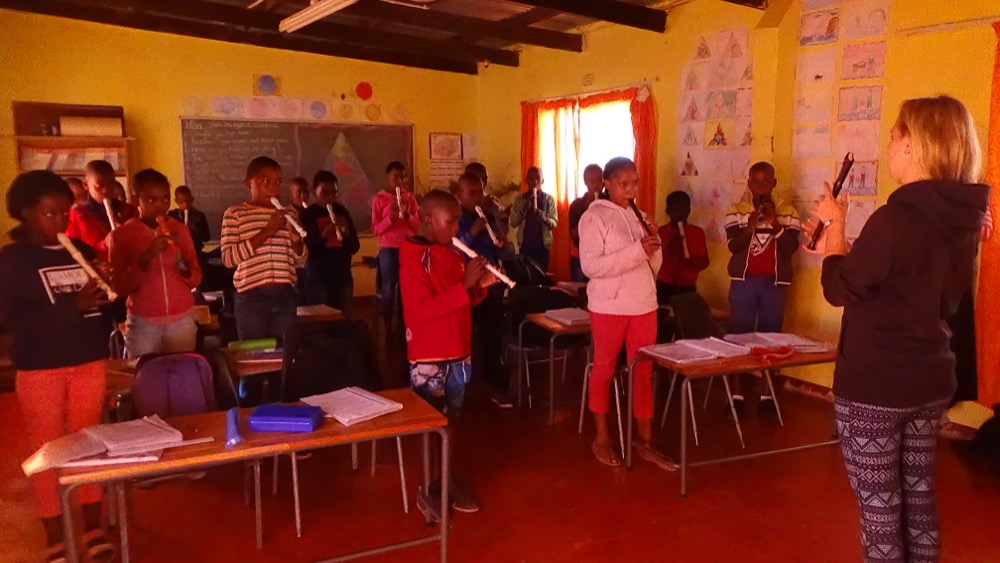
School days, mid-morning.
A good visit is on a normal school day, between 09:30 and 11:30. You'll see the kindergarten morning circle, sit in on a main lesson, and meet a class teacher.
Bring your child. Wear shoes you can walk in. Allow about two hours. There will be tea.
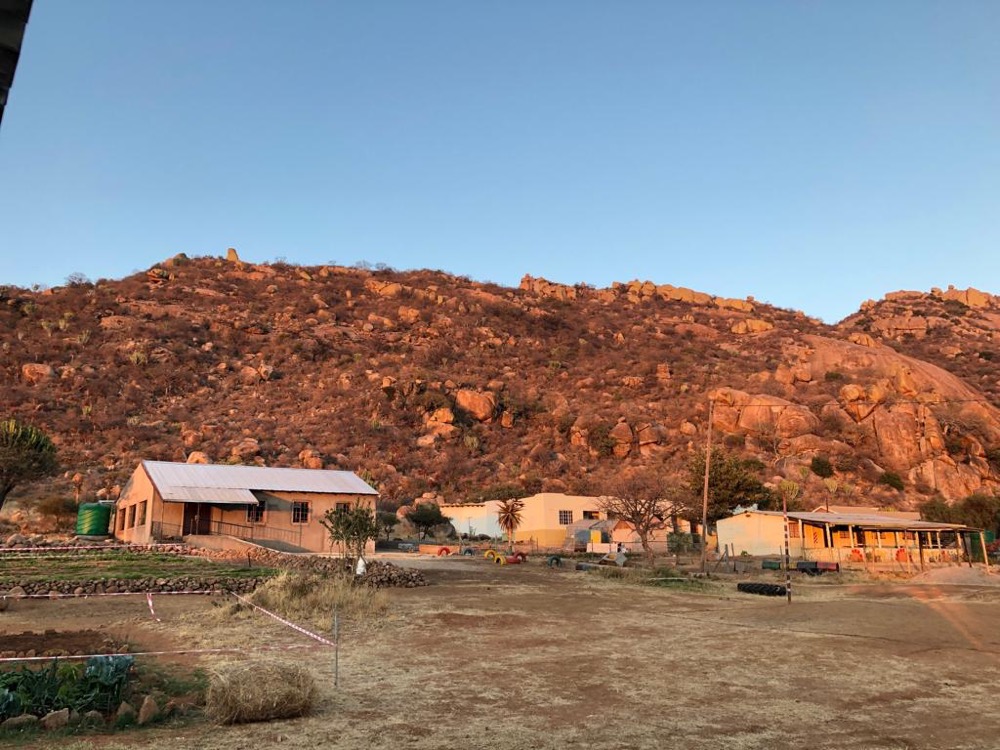
In Madietane, off the R521.
From Polokwane, take the R521 towards Vivo, turn at Ga-Matlala, and look for our painted sign on the left after the koppie. About 60 minutes by road.
Madietane Village, Ga-Matlala, Limpopo · P.O. Box 7254, Bakone 0746
Open in Google Maps →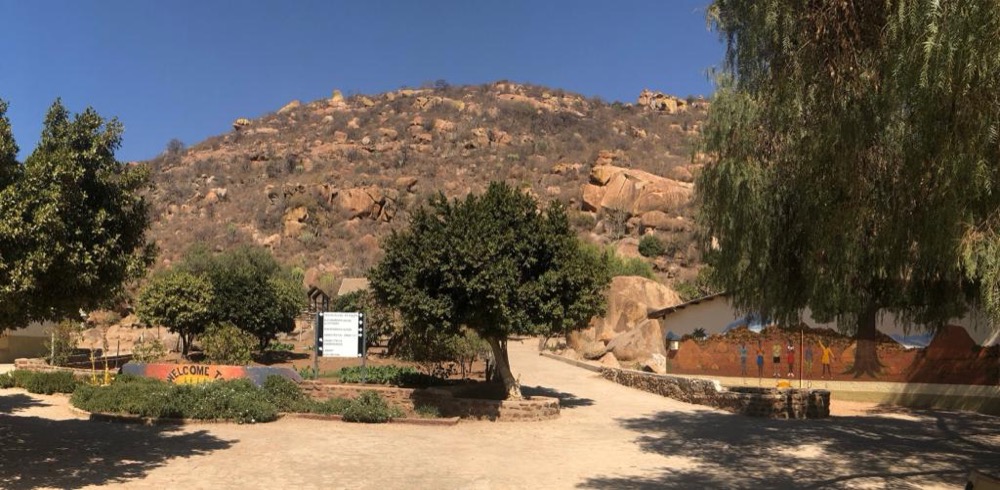
Pick the way that suits you.
Or write a few lines.
We'll reply within a school day. For applications, please visit us first.
Plain answers.
About Waldorf education
What is Waldorf education, briefly?
Waldorf is a non-denominational approach to education founded by Rudolf Steiner in 1919 in Stuttgart, Germany — for the children of workers at the Waldorf-Astoria factory, hence the name. It is now the largest independent school movement in the world: over 1,000 schools across 65 countries. South Africa has 17 Waldorf schools, all part of the same federation. The core idea is simple: a child is not a small adult. Children pass through distinct developmental stages, and education should meet the child where they are at each age.
Will my child be ready for high school after Class 7?
This is the question we hear most. Here is the honest answer.
Your child won't have spent seven years drilling for standardised exams. They will have spent seven years building thinking, feeling, and willing in deep ways. Within a term of starting high school, they will be ahead of their peers in the things that matter most. Within a year, they'll have caught up on anything specific they missed.
Is Waldorf religious?
Waldorf education is non-denominational and non-sectarian. Stories from many traditions are taught — indigenous African, Christian, Hebrew, Greek, Norse and others — but as cultural and developmental material, not as doctrine. A Class 3 child hears the story of Joseph and the coat of many colours because that story meets her at age eight, not because we are teaching her religion.
Will my child fall behind in maths or reading?
Reading is introduced more slowly than in mainstream schools. Most children read fluently by mid-Class 2 or Class 3 (around age eight) — a year later than they might in a conventional system. The trade-off is real, and worth understanding: when reading comes, it comes deeply. Children read for meaning, imagination, and pleasure — not for performance.
Maths is taught with equal rigour, in a different sequence. Numbers as qualities before quantities. Rhythm before drill. Multiplication tables learnt through movement and song. By Class 7, Waldorf children are working with algebra, geometry, fractions, and decimals — and tend to perform at or above their peers in international assessments.
What about screens and technology?
Through Class 5 (around age eleven), screens are kept out of the school day, and we ask families to keep screen use minimal at home. From Class 6, students may begin learning to type and use word processing for assignments. Internet use for research begins in middle school.
A child's developing brain wires itself in response to what it experiences. Three-dimensional, sensory, embodied experience builds different neural architecture than passive screen-watching. Waldorf doesn't claim screens are evil — we claim that childhood years are too short to be spent on a flat surface when they could be spent climbing a tree, kneading dough, or knitting a hat.
What if we want to leave Waldorf later?
You can. Waldorf children transfer to mainstream schools without lasting disadvantage. Lesedi will write your child a clear narrative report that helps the receiving school understand who your child is and what they have been learning. Your child will catch up on any specific content gaps quickly, and tends to bring strengths — sustained attention, comprehension, the ability to work through difficult material — that often surprise their new teachers.
We don't think of Waldorf as a one-way door. We think of it as the right start. What comes after is your family's to decide.
About Lesedi specifically
Where is the school, and how do families get there?
Lesedi Waldorf School is in Madietane Village, Ga-Matlala, Limpopo — roughly sixty minutes from Polokwane, off the R521 towards Vivo. Families travelling from the surrounding villages usually arrange shared lifts and taxis together; talk to us when you apply and we'll connect you with families from your area.
What languages are spoken at the school?
The primary language of instruction is English. Many of our families speak Sepedi as a first language, and Sepedi is woven into the school day — greetings, songs, festivals, and the names of things.
Are you a registered school?
Yes. Lesedi Waldorf School is a registered Independent Primary School under the Limpopo Province School Education Act (Act No. 9 of 1995), a non-profit organisation (NPO 016-343), and a member of the Southern African Federation of Waldorf Schools.
Do you have boarding?
Yes. The Lesedi boarding home accommodates children from Class 1 onwards — many of our families live too far for daily travel. The full picture, including a day in the dorm and the honest answers about homesickness, lives on the Boarding page.
Is this a school for children with learning differences?
Lesedi can suit a wide range of children. The emphasis on movement, rhythm, art, individualised attention, and the deep relationship with a class teacher who knows your child for seven years often serves children who struggle in conventional settings. But Waldorf is not specifically a remedial school. It is a school for any child whose family wants this kind of education.
If your child has specific learning needs, please tell us during the application — we'll be honest with you about whether we are the right fit, and we can recommend other excellent options if we are not.
Admissions & fees
How do I apply?
Four steps: visit us, apply at the office (R200), meet us on Interview Day in October, and register on acceptance (R1,000). The full process and all 2026 fee tables are on Admissions & Fees.
Can my child start mid-year?
Often yes, depending on the grade and current class size. The interview will help us decide whether mid-year is feasible for your child.
What if my child has never been to school before?
Welcome. The Kindergarten and Class 1 classes regularly include children for whom Lesedi is their first formal schooling. Talk to us about your child during the application.
What if we're struggling to pay one term?
Talk to us. We can almost always work something out. A school built on trust holds together when families are honest about money.
What is not included in the fees?
A small list: occasional school trips (modest cost), specific materials for older classes (e.g. Class 6 woodwork tools), optional extras (e.g. additional music lessons). The fees cover everything else — tuition, classroom materials, lunch, and for boarders, all meals.
Begin an enrolment.
Visit first, then apply — the figures and steps are all in the open.