What your child learns.
Seven years of Waldorf academics — meeting your child where they are, at every age.
Academics is the focus. Festivals, crafts and song are the rhythm that holds it together.
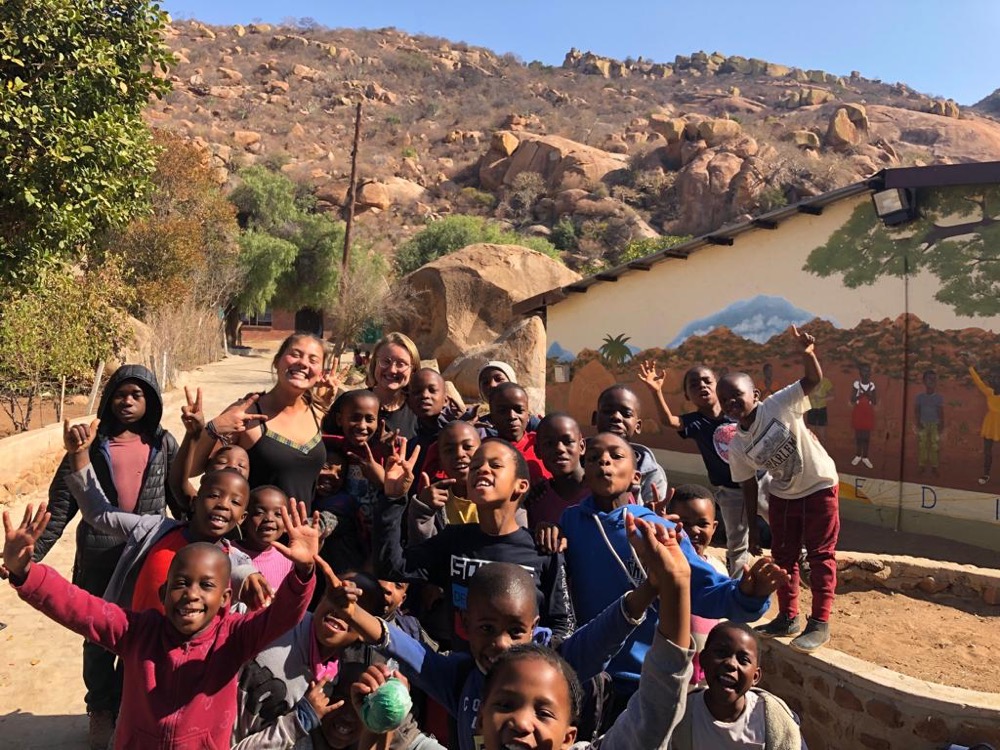
The first years are the deepest years.
Free play, story, song, and the rhythm of the day. We don't force reading or writing — we let it come naturally. Through play, the young brain builds itself: the dexterity of the hand, the focus of the eye, the capacity to imagine. In these years, the child's relationship to the adults around them — met with warmth and reverence — matters more than any lesson. The work of early childhood is to be a child, and to gather the imagination that becomes the foundation of every academic year that follows.
By the end of Kindergarten, your child knows how to sit in a circle, how to hold a knitting needle, how to follow a story for twenty minutes, and how to wait their turn. These are the academic foundations.
Letters arrive through stories.
Form drawing — straight, curved, geometric — that prepares the hand for writing and the eye for form. Numbers as qualities before quantities: one moon, two hands, three meals. Fairy tales, fables, and the legends of saints and tricksters.
Knitting in Class 1; crochet in Class 2; house-building, farming, and the Old Testament in Class 3. By age eight, most children read fluently — and times tables are learnt by clapping and walking.
The world opens outward.
Local geography of Madietane. Animal studies, the great myths and legends, the human body. Class 5 draws plants carefully and walks through Mesopotamia, Egypt and Greece. Class 6 turns to Roman history, business maths, geology and physics — the bones of the world.
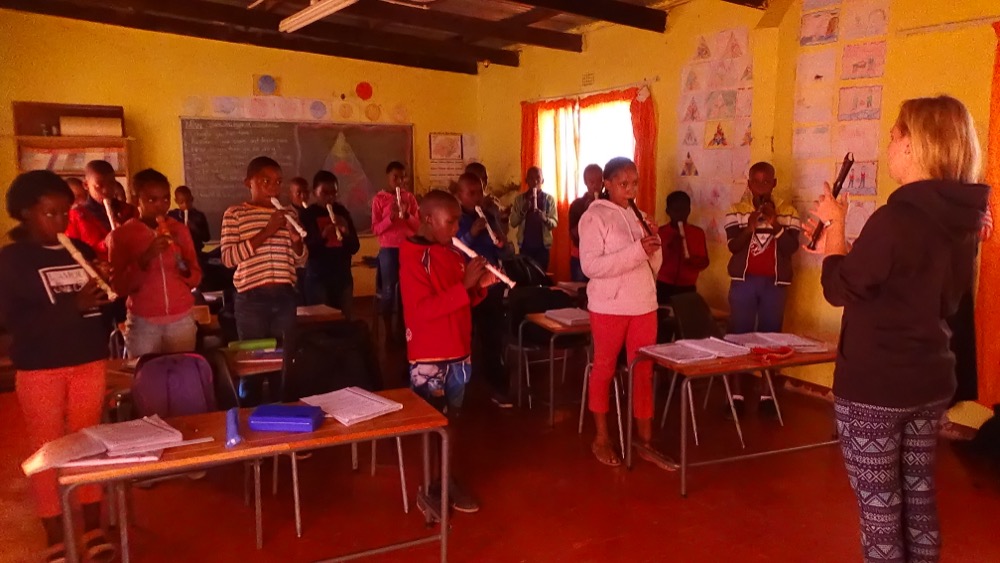
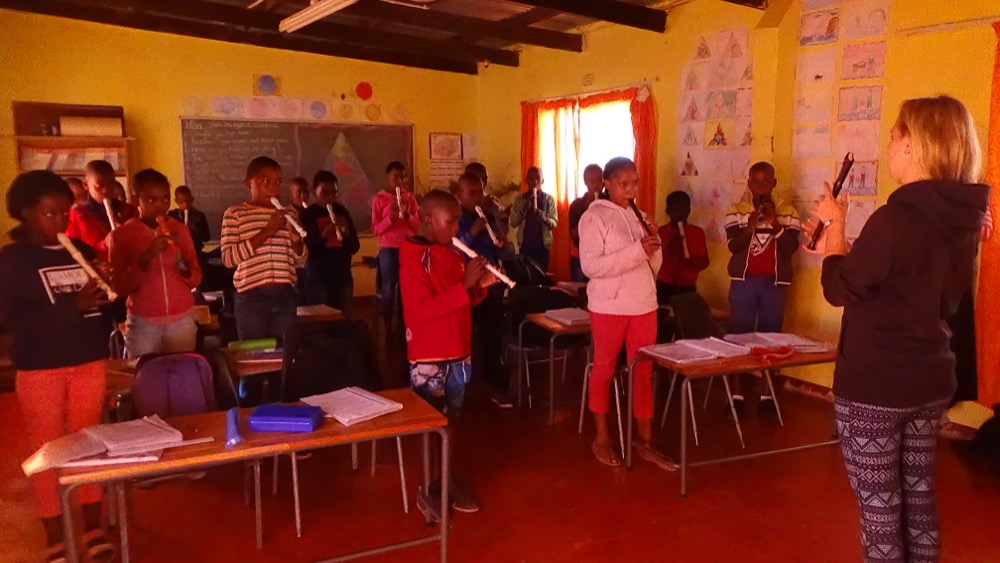
Long division, fractions, decimals. The recorder learnt in earnest. The child looks outward — and the curriculum meets them there.
Ready for what comes next.
Renaissance, Africa, chemistry, the inner life. The voyages of discovery — with their courage and their harm. Algebra and geometry; the chemistry of fire and salt.
By the end of Class 7, your child has been knit into a lifetime habit of curious, careful thinking — and is ready for high school. See the FAQ for the questions parents ask about the move to high school.
We do not fear technology. We sequence it.
Through Class 5, the school day is hands-on, eyes-up, screen-free — building the focus, imagination, and embodied skill that no app can teach. From Class 6, technology arrives — and your child is ready to use it, not be used by it.
How the Federation measures Lesedi.
Lesedi participates in the Southern African Federation of Waldorf Schools' annual assessments — held each September. These are not the standardised tests of mainstream schooling; they are the Federation's own check on whether each child is reading, writing and reasoning at the level the Waldorf curriculum expects for their age.
Founded in 1919. Today one of the largest non-denominational independent school movements in the world — not because the world stayed the same, but because what children need has.
Sit in on a main lesson.
The best way to see what your child will learn at Lesedi is to spend a morning here, watching it happen.